HR Trends 2024: The Evolution of the World of HR, from HRM, HCM to HRMS to HXM and the New Opportunities for HR Managers
HR trends 2024. In this article, we will explore emerging trends in HR Management for the year 2024. We will dive into the new trends that are gaining ground and are expected to continue to develop in the coming years.
The challenge for modern HR managers is to balance the human aspect of human resource management with the opportunities provided by technology. This includes adapting to ongoing needs change of employees. Improving workers’ experience and adopting AI solutions also should be considered to lead to more informed and strategic decisions.
Let’s make sense of the HR acronyms: HRMS, HRIS, HCM and HXM
In the field of human resources, we often encounter terms such as Human Resource Management Systems (HRMS), Human Resource Information Systems (HRIS) and Human Capital Management (HCM). Although these terms are sometimes used interchangeably, they have some substantial differences.
HCM refers to a broad concept that encompasses the full range of practices and software used to manage an organization’s workforce, from selection, onboarding, workforce management to even offboarding.

An HRIS is based on a database of employee information and supports more linear and quantitative HR processes, such as payroll processing or attendance management. In contrast, an HRMS offers a more comprehensive solution, integrating the data management capabilities ofHRIS with more advanced features such as talent management and more qualitative aspects.
The most advanced HRMS solutions incorporate intelligent technologies such as artificial intelligence, machine learning and cloud connectivity to intelligently personalize and automate HR functions.
“HR trends 2024, a new industry is changing the HR industry, a 466 MLD market”
Finally,Human Experience Management (HXM) marksa cultural shift in HR, placing the importance of the overall employee experience and the value that employee engagement brings to the company at the center.
Thanks to advances in technology, organizations can now have a complete end-to-end view of their workforce.

This has enabled them torecognize the measurable value of prioritizing the employee experience and adopting a people-centered approach to support HR administrative functions. This more holistic approach represents a significant shift in HR process prioritization and management.”
Among the most relevant new features for the HR trends 2024, l‘HR management is expanding its scope to include specific areas that were previously considered separately. Now the vision then of theHR has to be seen in the round and goes from traction to the d selection of new talent, to business climate management and employee welfare to performance management evaluation.

In short, the HR landscape is evolving rapidly, offering new opportunities to improve and innovate organizations in an AGILE way.
In this article these topics are discussed:
- Let’s make sense of the acronyms:HR: HRMS, HRIS, HCM and HXM
- HR trends for 2024
- Attracting top talent will be increasingly difficult
- Soft skills, the nine methodologies for detecting them
- Create an excellent Employee Experience
- Automation and AI, the new HR trends 2024
- Training, Reskilling and Career Pathways.
- The Centrality of Workforce Balance
- Diversity, inclusion and corporate welfare, a “must” of Hr trends 2024
- The Novo Approach to Performance Management
- The advent of new HR management software platforms.
- Conclusions
What will be the HR Trends 2024
In a work environment undergoing radical transformations, with rising costs and the challenges of finding qualified personnel, in addition to global economic uncertainties, professionals in human resources must face and overcome a unique range of complexities and challenges.
This scenario, marked by a profound revision of the traditional way of working, confronts HR professionals with significant and complex obstacles.
Among HR trends 2024, it is crucial to consider phenomena such as “great reassignment,” which refers to the increasing number of workers changing careers or industries in search of more favorable working conditions .

In parallel, we are seeing (whether due to crisis reasons or the aging of some industries) mass layoffs in certain sectors, a phenomenon that requires a structured approach to HR to manage turnover efficiently by dramatically lowering selection costs.
Another crucial aspect is Generation Z, which has now entered the labor market with different expectations and needs from previous generations.
The “Yolo Economy” continues in HR trends 2024
These young professionals place great emphasis on work-life balance, prompting companies to rethink their policies and practices to attract and retain talent.
So let’s waste no more time and delve into these and other trends that are shaping the future, HR trends 2024:.

Attracting top talent will be increasingly difficult
In the current European landscape, where unemployment rates remain surprisingly low, the main challenge for HR professionals is not only to unearth talent and latent workforce, but also to make their organization attractive to potential candidates .
So-called “employee traction” has become crucial: even before attracting and motivating talent to apply, it is essential that companies present themselves as desirable places to work.
The data then become even more confusing when one considers that turnover levels close to 30 percent can be reached in some industries in the first year of employment. We could therefore say “good but not great.”

Added to this are the characteristics of the younger generation, particularly Z. This generation places special emphasis on finding a meaningful work-life balance.
Generation Z, in fact, tends to evaluate job opportunities not only in terms of pay or career progression, but also, indeed, and especially by how well these align with a desire for quality of life and personal well-being.
People managers and recruiters are thereforelooking for new strategies and channels to identify diverse profiles, not limiting themselves to candidates who exactly match the required qualifications, but also extending the search to those who may not be actively seeking new opportunities and therefore harder to reach.
In the United States, these professionals are often referred to as “head hunters,” and they are currently faced with increasingly daunting tasks, having to employ innovative strategies andcreative techniques to identify and engage hidden talent that can add value to companies.

Innovative methodologies to detect soft skills
The challenges facing the world of work in the coming years will be profoundly influenced by the advancement of technology and artificial intelligence-based solutions .
This evolution, already underway, is revolutionizing the way we work, making some technical skills(so-called “hard skills”) obsolete or subject to a process of updating and renewal (reskilling).
“Soft skills are the real MUST of HR trends 2024.”
In this context, HR managers’ ability to identify talent will no longer focus so much on hard skills, As much as on soft skills. The latter, such as adaptability, cooperation, approach with social and relational intelligence, will become increasingly crucial.
In an era when HR practices are evolving rapidly, it therefore becomes crucial to have innovative tools capable of effectively probing candidates’ skills and characteristics. Today, simulations in virtual environments can be used to assess the real skills and qualities of candidates prior to interviews.
This type of technology makes it possible to anticipate a more accurate and in-depthanalysis of candidates’ potential before proceeding tosecond- and third-round interviews.
The use of these advanced tools can greatly increase the quality of the selection process. For HR managers, this translates into significant time savings and reduced costs associated with selection and the entire candidate evaluation process.
In essence, these tools offer a more efficient and focused approach to determining the best fit for a position, ensuring that resources are optimally invested during the hiring process.
Discover here
Whappy Skill Detector
to give quality to the selection process and cut down on time and costs 👇👇👇

These are key characteristics for dealing with issues such as change and resilience in a rapidly changing work environment.
As a result, HR managers will find themselves in the position of having to explore new terrain, looking for profiles that are more open to change, have a strong inclination toward collaboration, and possess advanced interpersonal skills.
This implies an ongoing search forincreasingly sophisticated and scientific methods and tools to assess these soft skills inan accurate and structured way.
The approach to recruitment and HR management will therefore need to evolve to keep pace with these transformations, with a focus on candidates’ ability to successfully navigatea work landscape characterized by rapid technological and cultural change . HR trends 2024 are already a reality.
Create an employee experience of excellence
Revolutionizing the Employee Experience will certainly feature prominently among HR trends 2024.
In human resources, employee experience has become a focal point.
The goal is to ensure a high-level work experience for employees, starting as early as the first contact with a job advertisement, continuing through the selection process, onboarding, the entire career path (workforce) within the company, and even the offboarding phase.

The goal is to develop a work style that not only enhances employees’ personal growth, but also fosters the experience of collaboration, discussion and exchange. This means focusing not only on the physical, mental and emotional health of workers, but also on supporting their growth as individuals and professionals.

In this vision, training programs aimed at preventing burnout, flexible work schedules, and the use of digital platforms for communication and engagement become key tools for a holistic approach to employee experience .
By putting people in all their dimensions and values at the center, we emphasize not only their involvement and loyalty to the company, but also their overall development, thus contributing to greater productivity and a more harmonious and satisfying work environment.

AI Automation and Innovation will be a must for HR Trends 2024
Human resource management is going through a phase of increasing complexity, due in part to the increase in processes entrusted to HR departments.
In this scenario, a central role in the 2024 trends will be played by automation, which promises to streamline a number of processes hitherto handled manually by HR or through semi-automated systems.
These, while functional, arenowhere near the new standards offered by the next-generation products currently being developed in the market.
Next-generation HR platforms are distinguished indeed by their ability to manage the entire workforce with advanced levels of automation.
They are designed toincorporate and integrate processes from ERP, CRM or other platforms, providing a unique experience for employees, a key point that greatly elevates standards of clarity and productivity.

In line with this trend, investment in HR technology is expected to increase by 2024. According to Statista analysis, the focus is particularly on HR analytics and data-driven tools, now also supported by AI.
Organizations that can effectively use this data to identify trends, evaluate the effectiveness of current strategies, and make informed decisions will gain significant competitive advantages.
A new approach to training, reskilling and Career Pathways
A key HR trend in 2024 will be employee growth through career paths and continuous self-improvement. According to research by Gartner, it shows that:
- 66 percent of HR leaders believe that the career paths offered by their companies are not sufficiently attractive to workers.
- 89% consider these pathways to be unclear and ill-defined.
Faced with these considerations, companies are being called upon to move beyond the traditional approach to designing career paths by adopting a more transparent and understandable strategy that allows workers to understand how to get promotions.

The goal and emerging trend, therefore, is to outline career paths that not only facilitate professional growth, but are also in perfect alignment with real company values. The goal is consistency, the real thing.
This transition marks the end of the “curricular” era, characterized by standardized training and career paths, to embrace a new era.
Companies will increasingly become “publishers” of themselves
In 2024, companies will have to assume the role of true “publishers” of their own training and related growth paths for their employees.
In the context of reskilling and continuous improvement, 2024 seems to be moving toward a more inductive and engaging approach to employee retraining. This trendhighlights the importance of personalized strategies and self-motivation. Let’s take a closer look at the characteristics of this approach:
Inductive and Engaging Approach
The shift to a more inductive process involves a model in which learning and retraining are driven by the needs, interests and initiatives of individual employees, rather than by rigidly structured top-down plans. In this model, employees are incentivized to independently explore the areas of development that they find most relevantand challenging, actively contributing to their own professional development.
Specific Content and Mode of Distribution
The focus is shifting toward providing highly specific content, both in terms of quality and mode of distribution. This means that the learning materials are not only of high quality and strictly relevant to the emerging needs of the industry, but they are also presented in ways that best suit employees’ learning preferences. Dedicated employee platforms play a crucial role in this, offering personalized and interactive environments that facilitate more dynamic and engaging learning.
Dedicated Employee Platforms
The new digital learning platforms are designed to be intuitive and user-friendly, allowing employees to easily navigate a wide range of learning resources. These platforms often incorporate gamification elements, personalized learning paths, and social learning tools that stimulate peer interaction. The ability to track one’s progress and receive feedback in real time serves as an additional incentive for employees to engage in their development.
Spontaneous Polarization of Redevelopment
With a more inductive approach, employees tend to “self-polarize” toward the areas of learning that they find most interesting and relevant to their career goals. This leads to greater intrinsic motivation and commitment to the learning process, as employees perceive reskilling not as an obligation but as an opportunity for personal and professional growth.
In this context, professional development programs then become increasingly personalized, faithfully reflecting corporate strategies and values in a coherent and targeted manner; in this scenario,of course, gamification makes it even more inductive than the norm.
Centrality of work-life balance with a Focus on Generation Z
One of the most noticeable changes in the world of human resources is the reformulation of the concept of work-life balance. Despite efforts to provide employees with a more satisfactory work-life balance, high levels of dissatisfaction among employees remain.
This situation is prompting a more in-depth review of what work-life balance really means, with the intention of developing proposals that respond more directly and individually to workers’ individual needs.
Particular attention is paid to Generation Z, which shows a growing interest in a more dynamic and flexible work-life balance. For example, proposed initiatives, within organizational constraints, include:

- Four-day work weeks at headquarters,
- Increased opportunities for remote work,
- Full respect for the right to disconnect.
Today, more than ever before, the trend is to not only ensure a work-life balance, but to go beyond that, seeking to meet the specific needs of each individual. This is especially relevant for Generation Z, which values work-life balance as a key factor in job choice .
Generation Z seems to have grasped this issue well and is redefining priorities in the world of work, with an increasing emphasis on work-life balance to reduce burnout.
“More work-life balance, less professional exhaustion” has become their mantra. And it is this generation, born between 1997 and 2021, that is leading that change. Statistics bear this out: 58 percent of Gen Z workers report experiencing burnout.

Another key theme in HR trends is that of sustainability, which has three main pillars: environmental, social and best practices in governance. This integrated approach is known as the ESG standard, an increasingly relevant criterion to assess a company’s impact and ethical practices. Through the adoption of this standard, companies demonstrate their commitment to sustainable and responsible management in three critical areas:
- Environmental: This criterion evaluates how a company affects the environment. This includes natural resource management, carbon footprint, waste treatment and pollution. Companies with strong environmental practices aim to reduce their negative impact on the environment through initiatives such as using renewable energy, reducing emissions and recycling.
- Social (Social): This component examines how the company manages relationships with employees, suppliers, customers and the communities in which it operates. It includes issues such as workers’ rights, employee welfare, community engagement and product responsibility. A company with a strong social commitment seeks to have a positive impact on society and ensure fair and safe working conditions.
- Governance (Governance): Governance concerns a company’s leadership, executive compensation, hearings and internal controls, and shareholder rights. Good corporate governance ensures that there is transparency, integrity and accountability in business decisions, helping to prevent corruption and ensure that companies operate in the interests of their shareholders and other stakeholders.
In summary, ESG provides a framework through which companies can be evaluated on their ability to operate sustainably and responsibly.

Companies Focused on Diversity, Inclusion, and Corporate Wellness
In the current environment, companies are increasingly being asked to develop and integrate ESG (Environmental, Social, and Governance) strategies, which address environmental issues, social equity, and transparency. In this framework, the role of human resources becomes crucial.
Employees show increasing appreciation for companies that adopt sustainable policies, social inclusion and organizational well-being.
This commitment not only improves the company’s image, making it more attractive, but also strengthens its ability to attract and retain talent in the long run.
“HR trends 2024, the new mantra is wellbeing”
Incorporating these ESG principles into the company’s DNA also means prioritizing respect for diversity, active inclusion and employee well-being, and an ongoing focus on social issues .
These aspects, in addition to positively influencing human resource management, represent key trends toward which every organization should move in order to be at the forefront of the modern work environment.

Recognize that change management therefore is a crucial element in any innovation process. It is not just about introducing new technologies or processes, but ensuring that these are effectively integrated into the company’s culture and daily operations.
Use change management techniques to manage resistance, effectively communicate the reasons for change, and illustrate the benefits to the organization and individuals.
Provide ongoing support during the transition, including appropriate training, resources and assistance to ensure full adoption and adaptation to the new WFM system.
Measuring the effectiveness of change management initiatives Through regular feedback and success metrics. This reassures that the process of change is in line With business objectives.
New Performance Management Thanks to Emerging Technologies and AI
The field of performance management is undergoing a profound transformation. Considering that only a minority of workers perceive performance reviews as actually useful, it is clear that a renewed approach to performance appraisal is needed.
This new approach includes:
- The setting of clearer and more detailed goals,
- An objective and impartial evaluation of each employee’s contribution,
- The identification of core competencies for achieving business goals.
With the introduction of next-generation HRM platforms, many of the verification and evaluation functions, as well as the measurement of specific KPIs, can now be automated and calculated at the root.

This allows for automatic convenient dashboards where values can be kept monitored to intervene promptly in case of anomalies.
The integration of these technologies aims to implement a performance review system that is not only transparent, consistent and fair, but also contributes tangibly to productivity improvement.
Certainly, let’s understand, the market already offers advanced KPI measurement tools and high-level analytics systems.
However, the main goal of these technology suites is to provide essential and decisive data that offer relevant insights based on actual operations.
This approach is intended to eliminate the need for HR managers to “drill out” analysis, instead allowing for immediate and direct reading of insights that are closely linked to the elements configured in the platforms.

This technological evolution is a key step toward more effective performance management aligned with contemporary business needs.
The advent of new software platforms from HRM to HCM
In the modern business environment, the effectiveness of human resource management is therefore amplified by the use of next-generation HR platforms .
These platforms offer a variety of advanced features designed to streamline and simplify every aspect of personnel management.
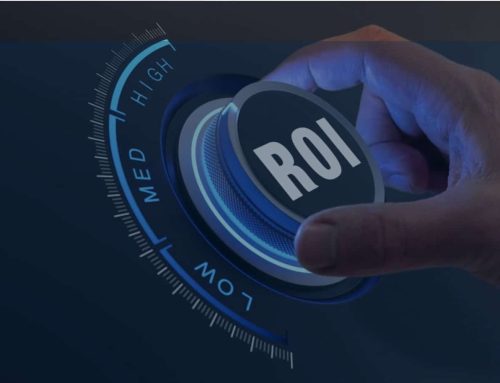
From attracting talent to their exit from the company, every stage of the employee life cycle is supported by technology tools. Imagine if for each process automation impacts only de 5% in terms of time savings, can you calculate the ROI on the total?
Can you imagine the impact of Automation on your ROI?
The key functions of these platforms cover a wide range of processes. Each function covers a specific role in contributing to the overall success of the organization and the realization of corporate goals.
- Traction: Refers to the ability to attract talent and potential employees. This process includes creating an attractive corporate image and promoting a desirable work culture. HR platforms can help disseminate this information through various channels, ensuring greater visibility and appeal.
- Selection: Concerns the selection of the most suitable candidates from among those who responded to the advertisement. This function includes assessment of skills, experience and cultural compatibility. Technology can provide automated screening tools and data analysis to facilitate this process.
- Recruiting: Focuses on the entire recruitment process, from posting the job ad to signing the contract. HR platforms can automate many of its steps, such as managing applications and arranging meetings.
- Onboarding: This stage concerns the integration of new employees into the company. Platforms can offer online training modules, automated checklists and progress tracking to ensure effective and structured onboarding.

- Workforce Automation: Refers to the use of technology to automate personnel management processes, such as work scheduling, absence management and reporting. This increases efficiency and reduces the administrative workload on HR.
- Performance Management: Management of periodic employee evaluation, feedback and development plans. HR platforms can provide tools to track performance, set goals, and organize feedback sessions.
- OKR and KPI Management: Helps define and track Objectives and Key Results (OKRs) and Key Performance Indicators (KPIs). Platforms can automate the monitoring of these parameters and provide analytics to guide business decisions.

- Incentive Systems (Rewarding): Represent the process of recognizing and rewarding employees for their work and achievements. HR platforms can manage incentive programs and ensure that they are distributed fairly and transparently.
- Offboarding: Deals with the management of labor termination. This may include gathering feedback, managing administrative procedures, and ensuring that the transition is as smooth as possible. HR platforms can automate and simplify many of these tasks. Contrary to what one might think, the offboarding phase is essential because it represents the conclusion of the employee’s life cycle within the company. This often underestimated moment is crucial for both the departing employee and the organization, as well as for the branding of the company itself.
Conclusion, a new role for HR managers is born
The introduction of cutting-edge HR innovations is thus redefining the role of the HR manager.
Thus, a much broader strategic dimension is now attributed to the HR manager than in the past. In this rapidly changing environment, it is no longer sufficient to limit oneself to administrative personnel management. Rather, HR managers are now required to have a comprehensive strategic vision, coupled with deep knowledge.
Thus, it is a matter of having the “domain” of new technologies and digital transformation processes.
HR managers’ responsibilities now expand toward keeping abreast of and understanding the latest technological innovations.
Increasingly, therefore, there will be a focus on data management with sophisticated HRM platforms. This technological knowledge is not only a matter of operational effectiveness, but becomes critical to driving the entire organization.
Digital transformation processes such as change management then become essential skills in this context.
HR managers must be able to Managing organizational change. HR will need to ensure that the transition to new systems and processes Is smooth and accepted by the staff. This requires a deep understanding not only of technologies, but also of human and organizational dynamics.
This evolution of the role marks A new scenario for the industry. HR will transform HR as a pillar central to companies’ overall strategy and success.
#HRTrends2024 #HRTechnology #HRInnovation #DigitalTransformation #FutureOfWork #HumanResourcesManagement #AIinHR #EmployeeExperience #ChangeManagement #StrategicHR